Document the saggar’s full journey through the kiln
The saggar carries the charge on a kiln car through heating, the hot zone and cooling. Temperature differences across its walls can contribute to thermal stress. Use operating records to estimate the temperatures and the time spent in the heating and cooling stages.
Work from a drawing or an intact sample
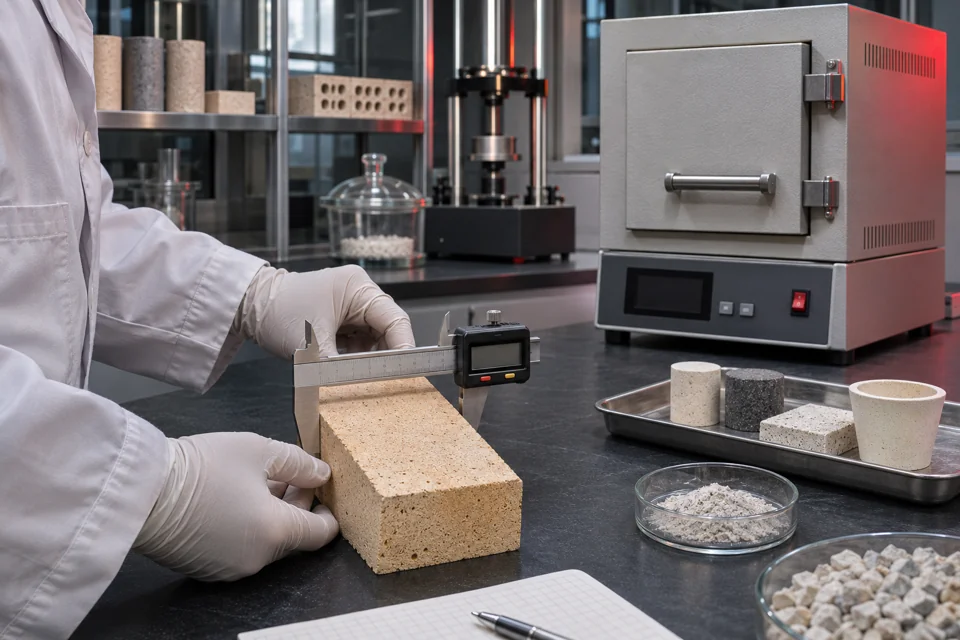
Record height, internal and external diameters, base and wall thickness, and the seating surface on the car. A worn sample may differ from the original drawing. If a damaged item is all you have, mark which dimensions come from the drawing and which were measured on the part.
Compare the published grades against the same duty
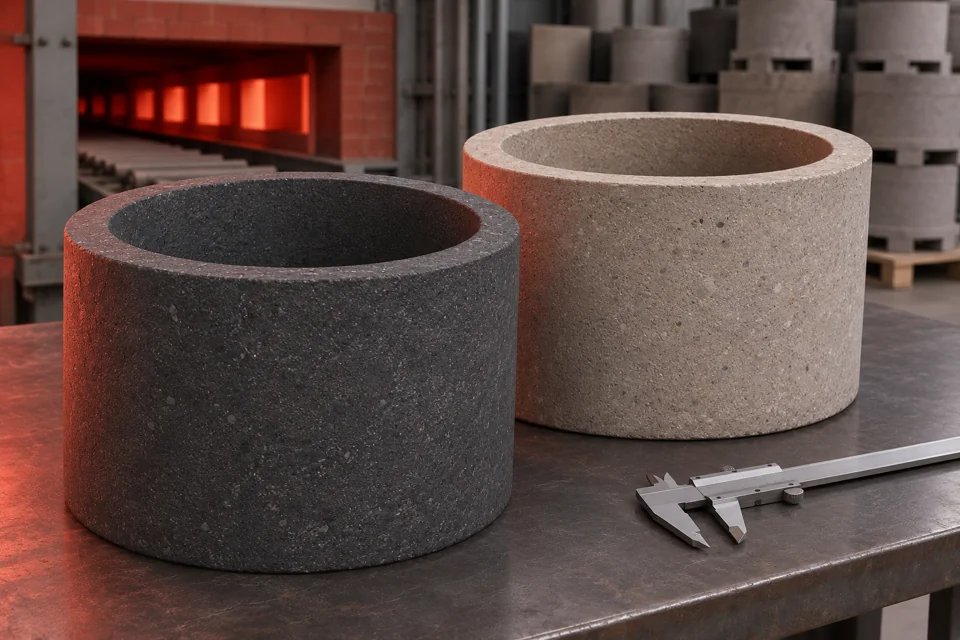
Magma lists cast saggars with 90% silicon carbide and approximately 80% mullite phase, respectively. Provide the same duty description when comparing the options. Include the charge material, position on the car and any history of oxidation or cracking.
Provide the failure history alongside the dimensions
Photograph the base, rim and visible crack initiation area. Include the approximate service life in cycles, if recorded. Note whether failures are concentrated on certain kiln cars or positions, as those differences may help explain the pattern.
Put acceptance criteria in the enquiry
Send the drawing or sample details, service conditions, quantity, delivery date and dimensional tolerances together. For an initial sample, agree how fit and performance will be compared with the current saggar before placing a larger order.